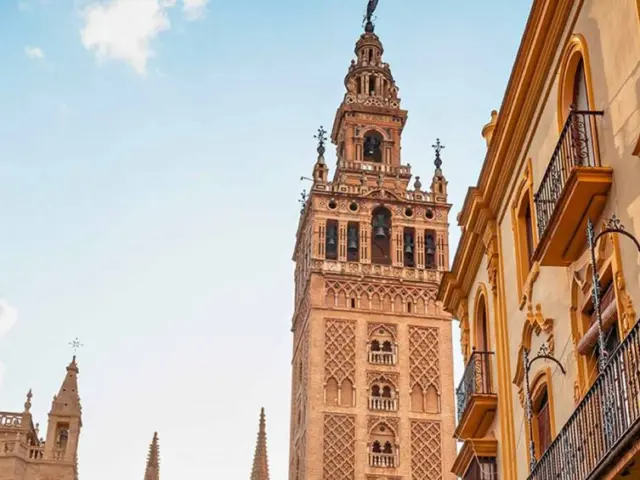
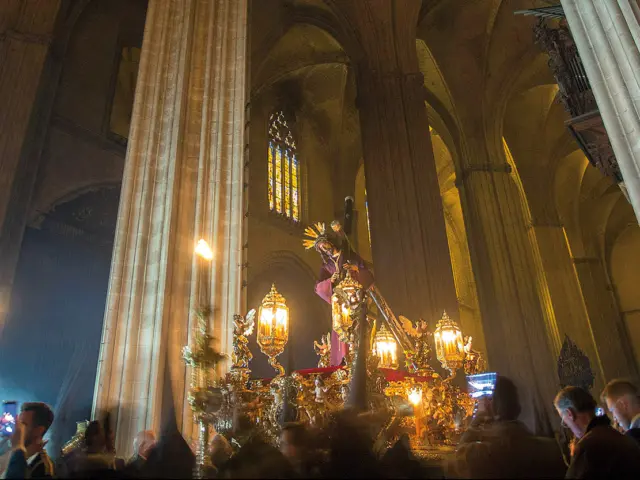
The largest Gothic church in the world and Seville's most impressive visit. Declared a World Heritage Site in 1987, it houses the tomb of Christopher Columbus, more than 80 chapels and the largest high altar in the world. The 104-metre Giralda was a 12th-century Moorish minaret converted into a Christian bell tower. Book weeks in advance in high season.
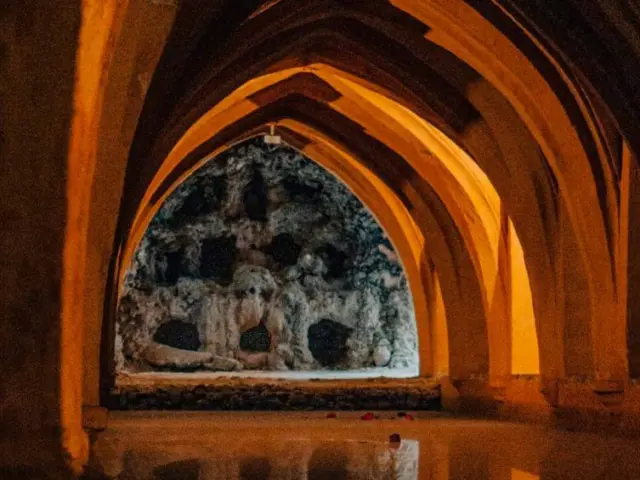
The oldest royal palace still in use in Western Europe. A fascinating blend of Mudéjar, Gothic and Renaissance styles. Its 15 hectares of gardens with fountains and mazes are a paradise. Filming location for Game of Thrones. The Spanish royal family still uses it. Free entry on Mondays from 18:00 to 19:00 in low season.
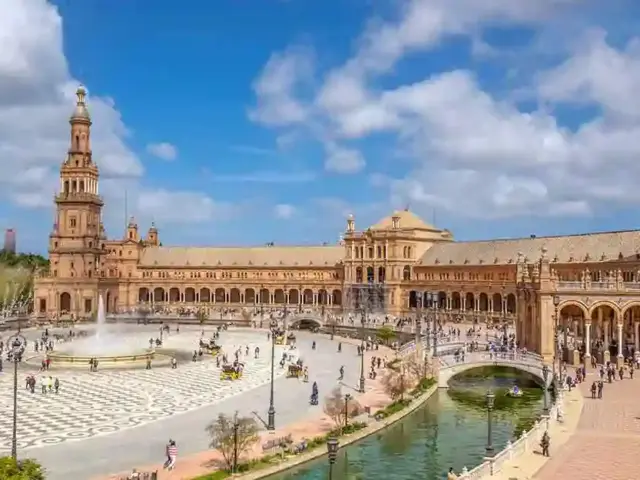
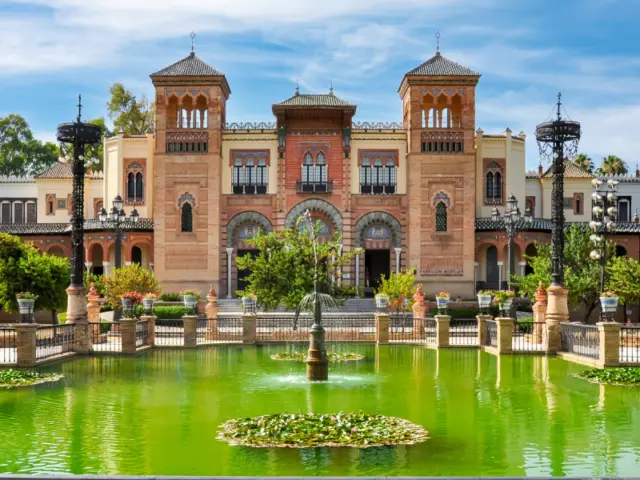
Built for the 1929 Ibero-American Exhibition. Its 200-metre semicircle with 48 tiled alcoves (one per province), canal with boats and 74-metre twin towers make it iconic. Filming location for Star Wars and Lawrence of Arabia. Free visit 24 hours a day.
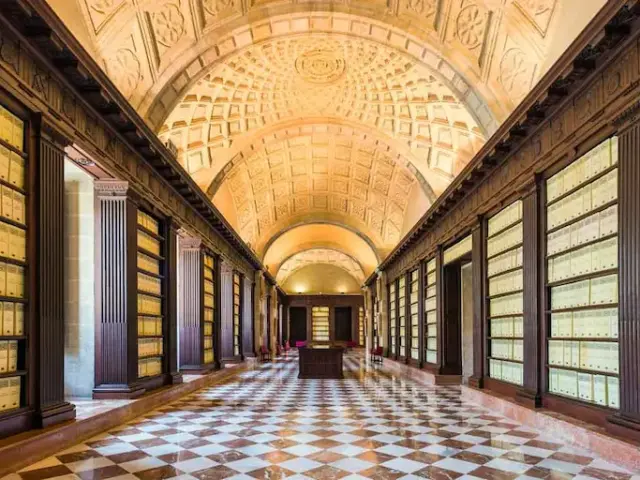
More than 80 million handwritten pages on the history of America and the Philippines: Columbus's diaries, letters from Hernán Cortés and maps of the conquest. The building, the former Exchange of Merchants by Juan de Herrera, is a masterpiece of Spanish Renaissance. Free entry.
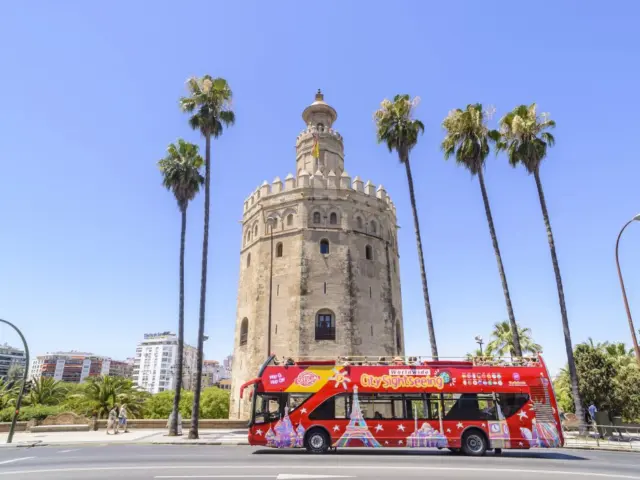
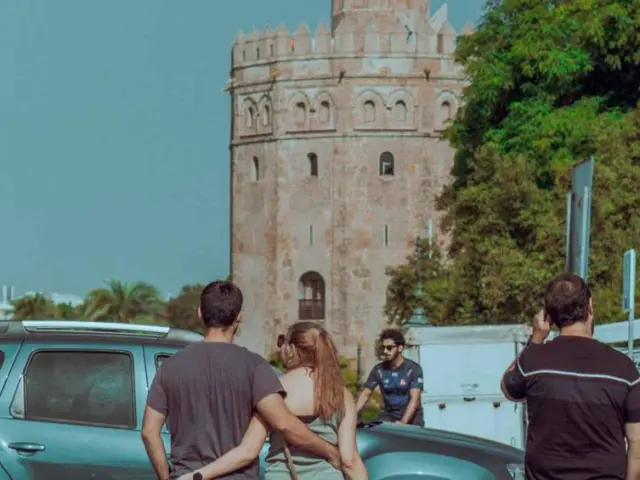
Seville's most famous medieval watchtower. This 13th-century Almohad tower closed the Guadalquivir with an iron chain. Its golden tiles gave it its name as they reflected on the river. It houses the Maritime Museum and a panoramic terrace. Free entry on Mondays.
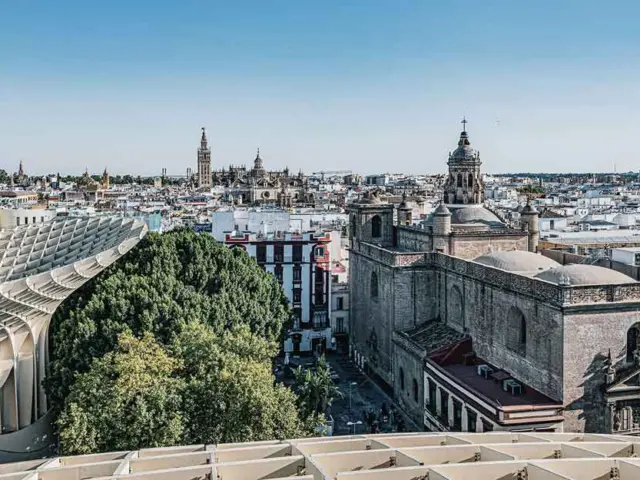
The largest wooden structure in the world (2011). This 150-metre urban parasol houses the Antiquarium with Roman remains, the Encarnación Market and a panoramic walkway with the best views of the Giralda. Illuminated at night, it is a unique spectacle in Europe.
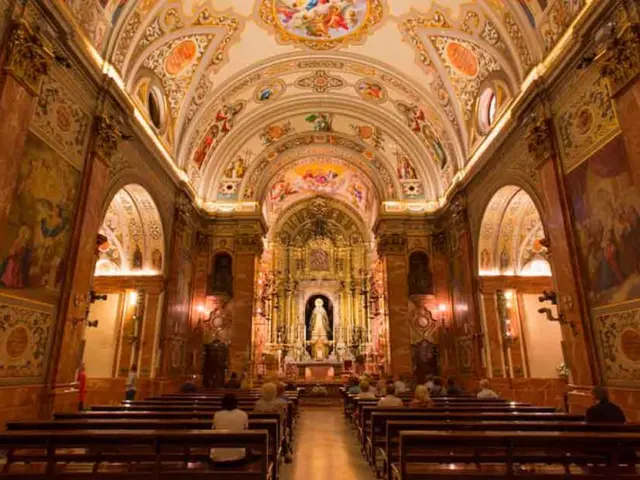
Sanctuary of the Virgin of Hope Macarena, Seville's most venerated image. This 17th-century carving leads the most moving procession on Good Friday. The museum holds the gold-embroidered canopy and historic jewels of incalculable value.
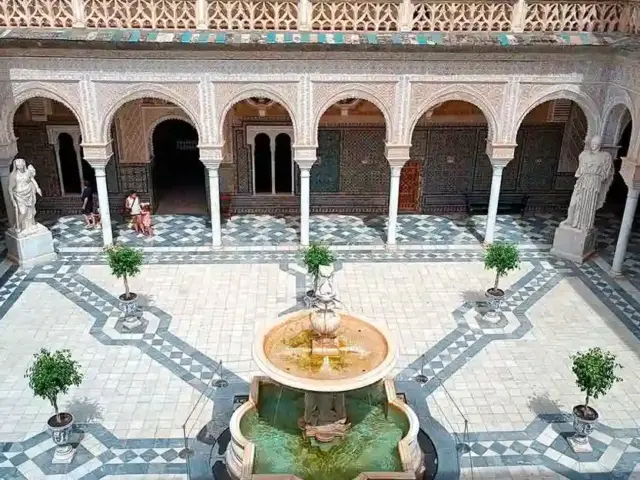
Seville's largest private palace (Casa de Medinaceli, 16th century). It fuses Mudéjar, Gothic and Renaissance elements in a unique combination. It houses the largest private collection of Roman sculpture in Spain and courtyards with extraordinarily beautiful tilework. Much quieter than the Alcázar.
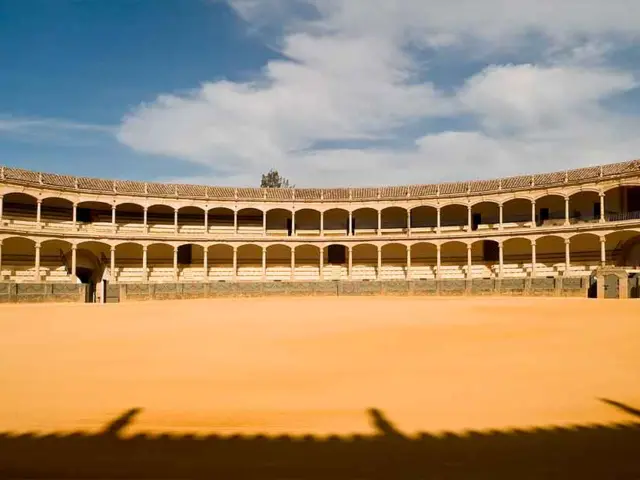
The oldest and most important bullring in Spain (1749-1881). Its oval layout with 12,000 spectators and the Prince's Box are heritage icons. The Bullfighting Museum, with the suits of light of Belmonte and Joselito, is one of the best in the world.
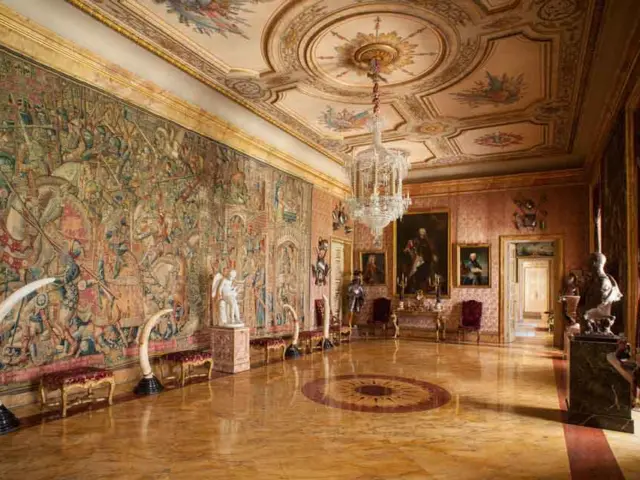
Historic residence of the Dukes of Alba, famous as the birthplace of the poet Antonio Machado (1875). Its Mudéjar courtyard, galleries and gardens with more than a hundred trees, and its art collection make for an intimate and unique experience. Open to the public since 2016.
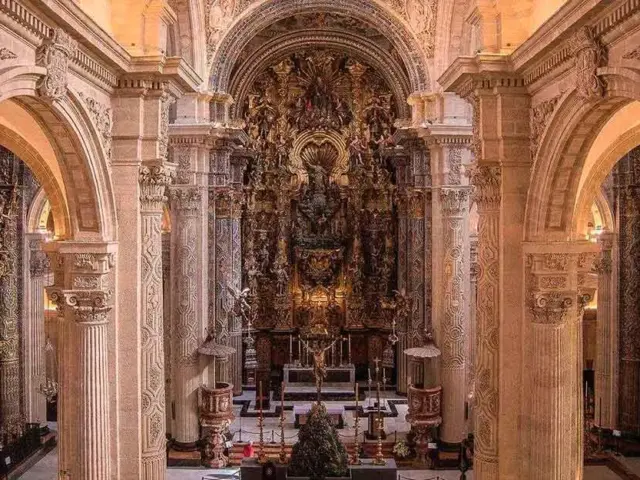
Seville's second-largest church, built in the 18th century on the site of the former Moorish main mosque. It houses the Christ of Love by Martínez Montañés and the Jesus of the Passion. The Plaza del Salvador around it is the sevillanos' favourite meeting point.
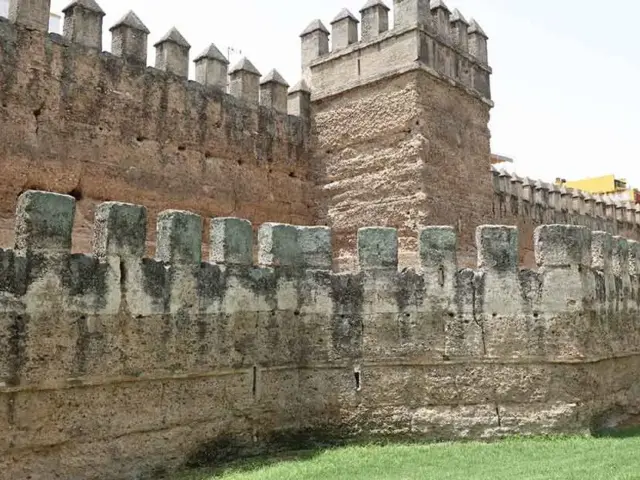
The only preserved section of the 12th-century Almohad wall: 180 metres and 12 square towers built over a 2nd-century Roman wall. A first-rate medieval relic in the heart of Seville. Free exterior visit 24 hours a day.
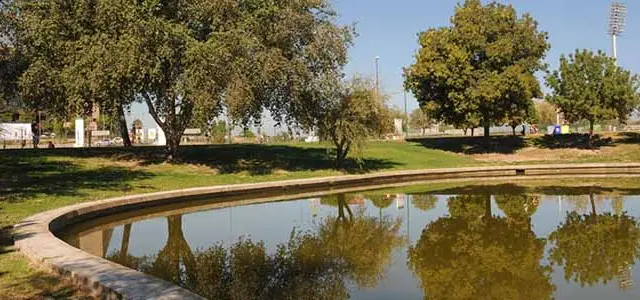
Seville's green lung: 34 hectares of historic gardens donated in 1893 by Infanta María Luisa. It has themed roundabouts, ponds with swans, the Bécquer Roundabout and a colony of free-roaming peacocks. In summer, several degrees cooler than the rest of the city.
Seville's former Jewish quarter and the city's most photogenic corner: a maze of white narrow streets, intimate squares with orange trees and geranium pots that smell of orange blossom. Calle Agua, Plaza de Doña Elvira and the Hospital de los Venerables are its gems.
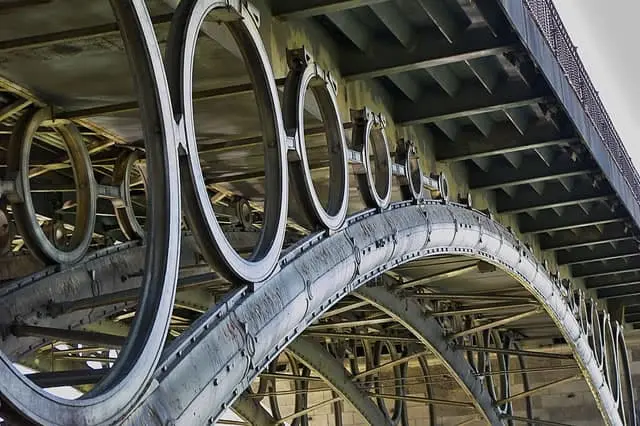
Seville's oldest bridge and the first iron bridge built in Spain (1852). One of the best viewpoints over the river, with views of the Torre del Oro at sunset. Remains of the Castle of San Jorge, former seat of the Inquisition, are preserved beside its piers.
The most revered Christ sanctuary in Seville: the Señor del Gran Poder, a masterpiece by Juan de Mesa (1620). One of the absolute peaks of Spanish Baroque sculpture. The Brotherhood, founded in 1431, organises one of the most solemn processions on Good Friday.
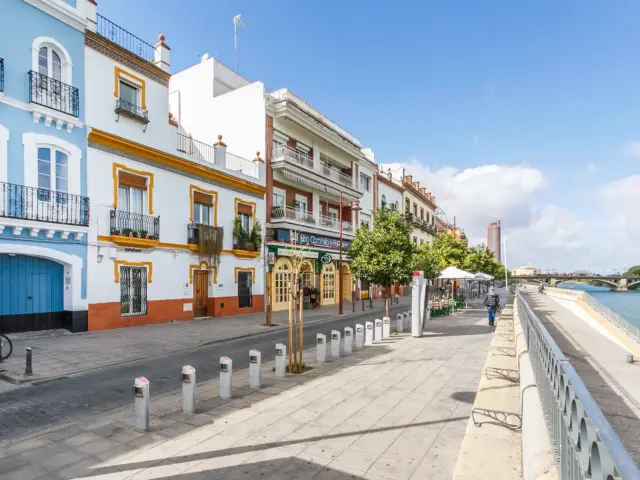
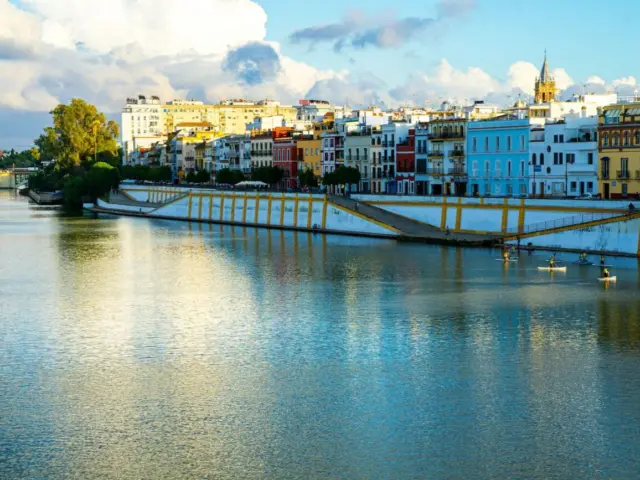
The birthplace of flamenco, artisan ceramics and the sailors who accompanied Columbus. Triana has a distinct identity of its own. The Market built over the ruins of the Castillo de San Jorge and the lively Calle Betis with night views over the river are unmissable.
Triana Cathedral: Seville's oldest parish church (1276), commissioned by Alfonso X the Wise. One of the oldest Gothic buildings in Andalusia. It houses the Virgen de la Esperanza de Triana and the Cristo de la Expiración (El Cachorro).
One hundred hectares of Mediterranean forest created for Expo 92. With the Lago Olímpico rowing lake and the emblematic Puente del Alamillo by Santiago Calatrava —its 142-metre pylon leaning like the Tower of Pisa— it is one of the most beautiful natural spaces in Seville.
Where Christopher Columbus lived and was initially buried. Founded in 1400, it later became the Pickman ceramics factory and the Royal Pavilion of Expo 92. Today it is the Centro Andaluz de Arte Contemporáneo (CAAC), with works by Barceló, Saura and García Rodero.
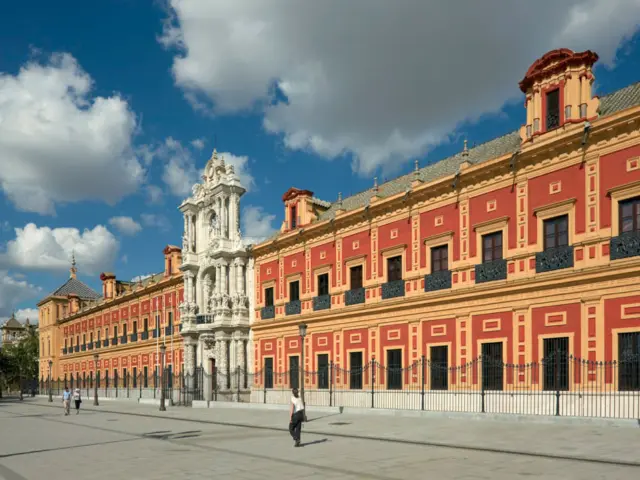
Seat of the Presidency of the Junta de Andalucía. Its Churrigueresque façade with 24 statues of illustrious Sevillians is one of the high points of Spanish Baroque in Europe. It was the School of Navigation for the Indies and the residence of the Dukes of Montpensier. Free visits on designated days.
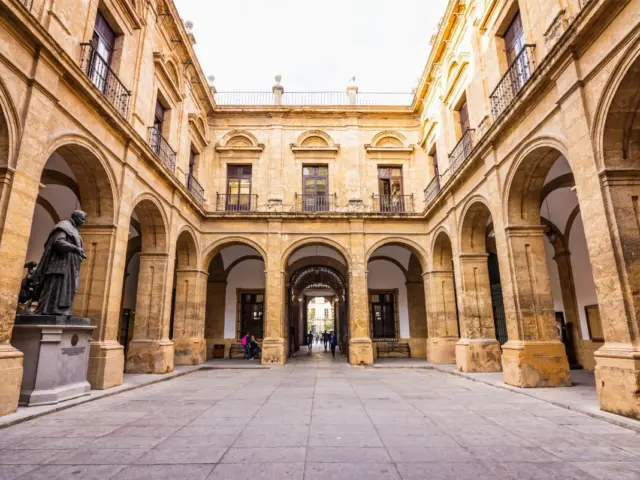
The second-largest civil building in Spain after El Escorial. The largest tobacco factory in the world for two centuries, with 10,000 cigarette workers who inspired Mérimée to create Carmen. Today it is the University of Seville, one of the most beautiful campuses in the world.
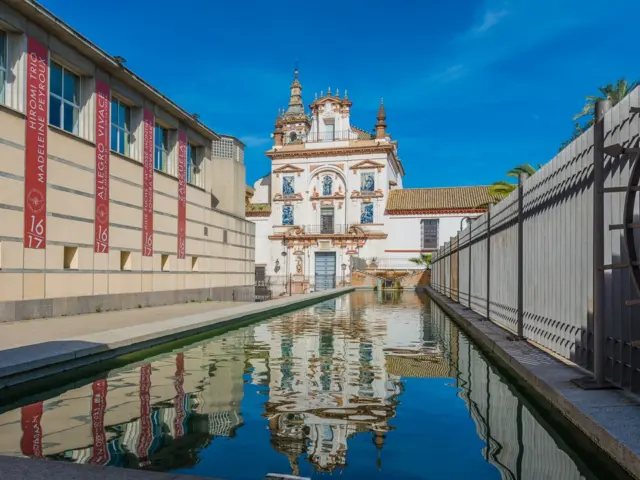
Founded by Miguel de Mañara (the historical Don Juan), it houses masterpieces by Murillo and Valdés Leal, including the haunting paintings of the Postrimerías. It is still an active hospital. Seville's great artistic secret that leaves everyone who visits it astonished.
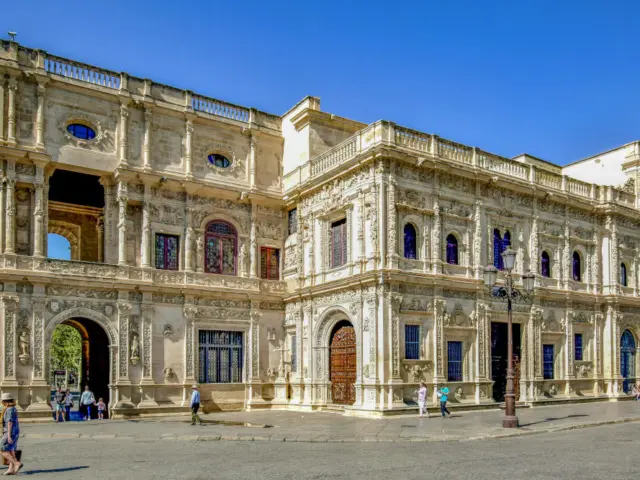
The Town Hall with its 1527 Plateresque façade is the finest example of Plateresque Renaissance architecture in Spain. Diego de Riaño covered its façade with medallions, grotesques and reliefs of incomparable delicacy. The Hall of the Mayors is accessible on free guided tours.
Arenal
There are no monuments matching that filter.
For businesses
Do you have a business in Seville? List it here
Thousands of people search every day for where to eat, what to do and where to go. Appear in the guide, on the map and on our social media.