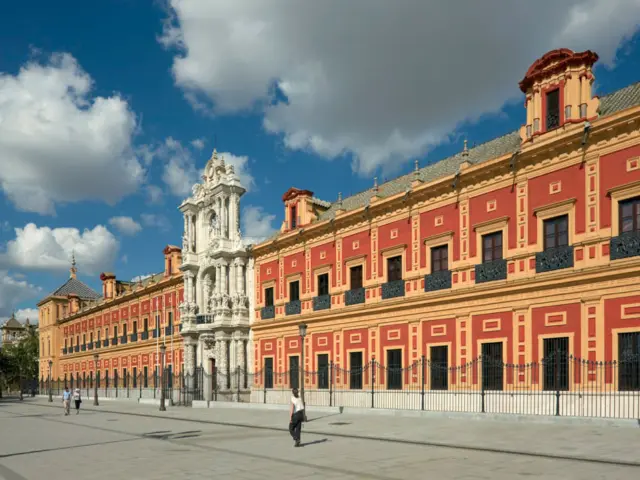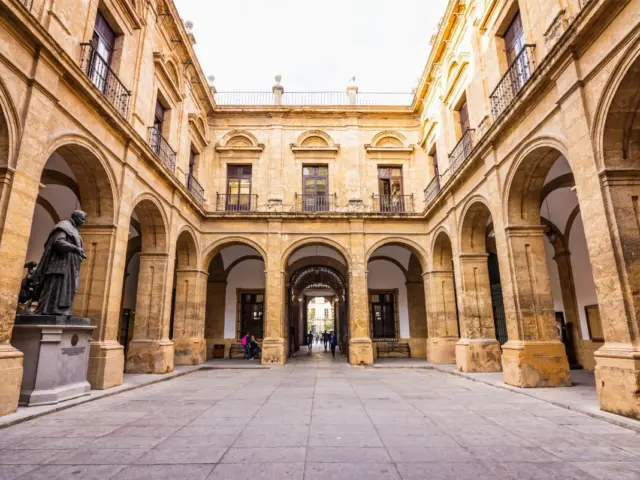
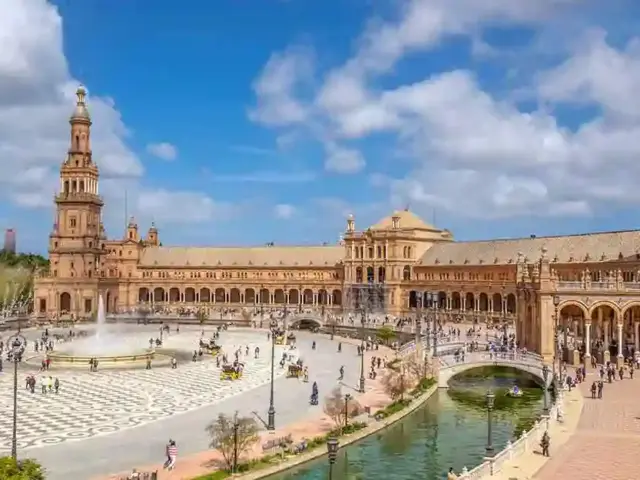
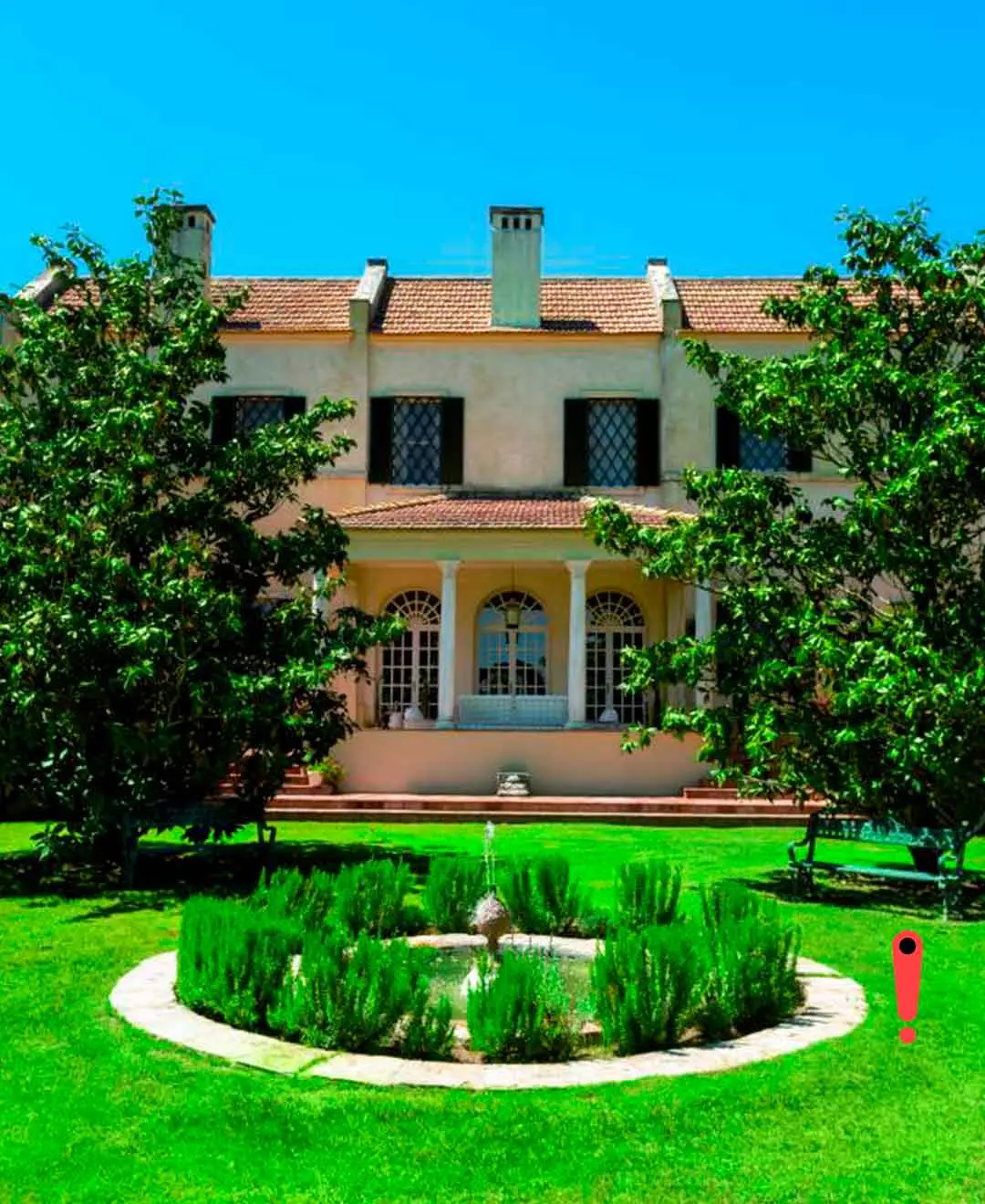

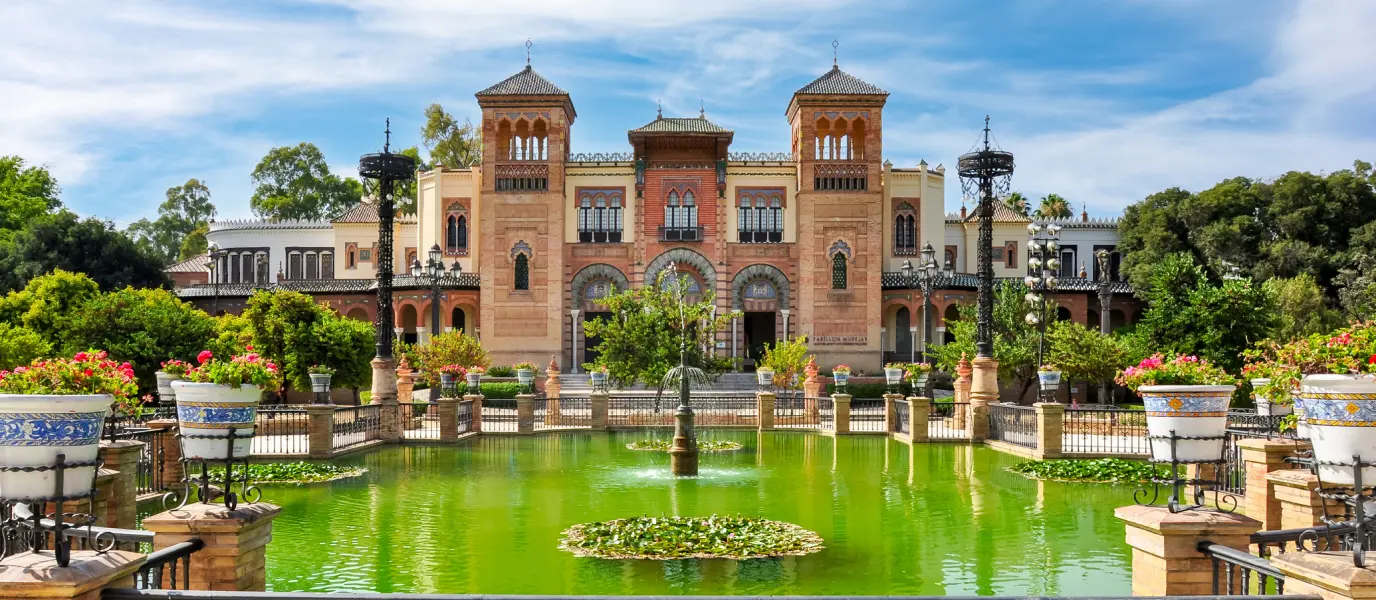
The María Luisa Park is Seville's most important historic park and one of the most beautiful urban gardens in Spain. Its origins date back to 1893, when the Infanta María Luisa de Borbón donated to the city half of the gardens of the San Telmo Palace so that Sevillians could enjoy them freely. In 1929, the French landscape architect Jean-Claude Nicolas Forestier redesigned them for the Ibero-American Exhibition, creating a highly sophisticated layout with themed squares decorated with Triana tiles, ponds with ducks and swans, fountains, laurel-lined walkways and rows of palm trees. Its 34 hectares contain more than thirty squares with busts of Spanish-speaking artists and intellectuals, the famous Glorieta de Bécquer, and a colony of peacocks that roam freely among visitors.
Av. de María Luisa, s/n, Sevilla