
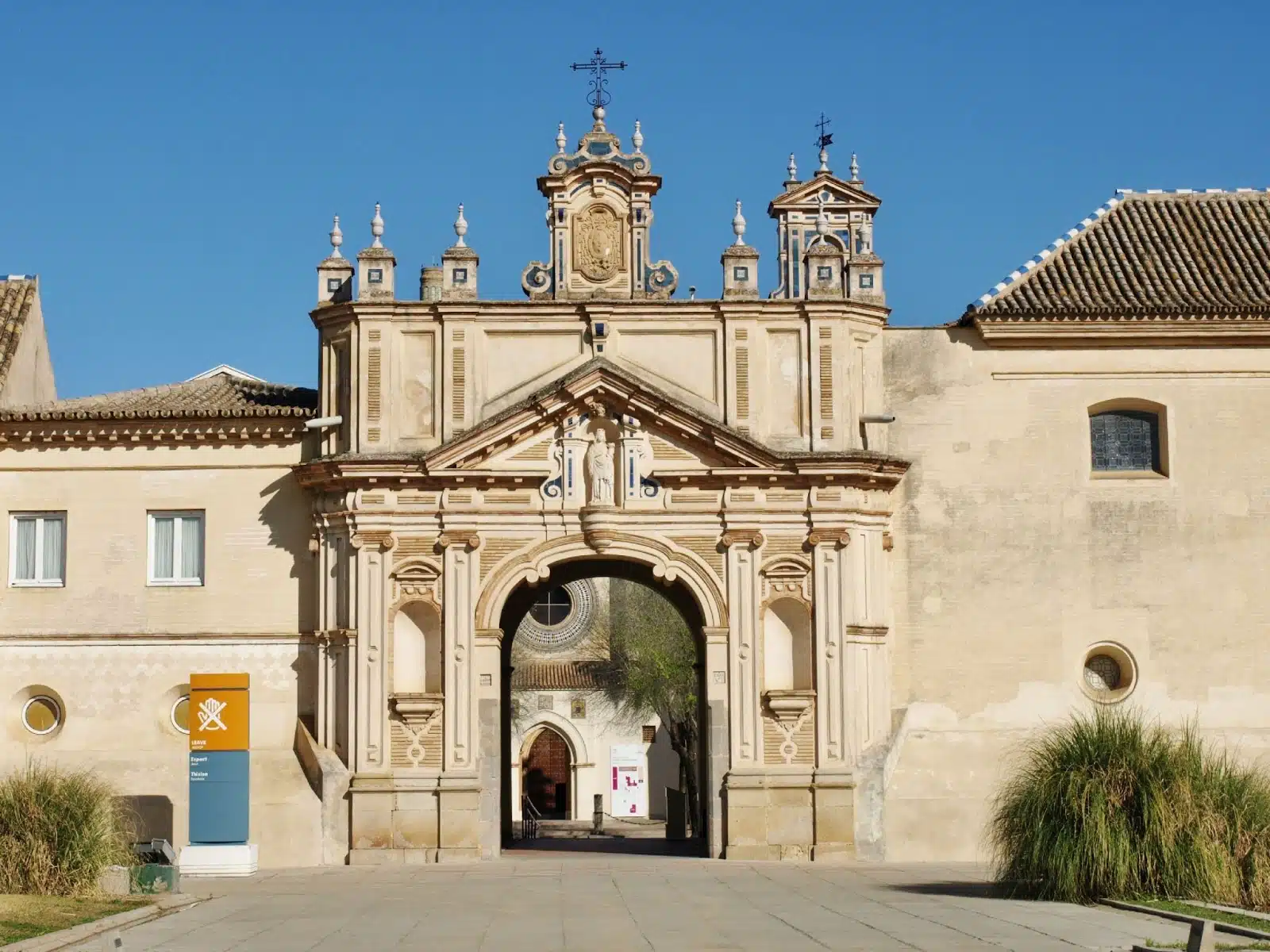
The Monastery of Santa María de las Cuevas, on the Isla de la Cartuja, is one of the places with the most layers of history in all of Seville. Founded in 1400, it was one of the most influential monasteries of the Crown of Castile during the 15th and 16th centuries. Christopher Columbus lived in the monastery for long periods, preparing his expeditions to the New World, and his remains rested here for twenty-five years before being moved to the cathedral. In the 19th century it was acquired by the English businessman Charles Pickman, who installed his famous earthenware and porcelain factory: the large bottle-shaped kilns are preserved today as industrial heritage. For Expo '92 it was the Royal Pavilion of Spain, and since then it has housed the Andalusian Centre for Contemporary Art (CAAC), with works by Miquel Barceló, Antonio Saura and Carmen García Rodero.
C. Américo Vespucio, 2, Sevilla