


Seville is a city of stories intertwined with art. Strolling its streets means encountering centuries of creativity embodied in monuments, façades and churches. But some stories go beyond what meets the eye, tales that hold both tragedy and legend. That is the case of Antonio Susillo, the sculptor who left his mark on Seville and whose fate became forever linked to his most emblematic work: the Cristo de las Mieles.
Antonio Susillo: the misunderstood genius
Born in 1857, Antonio Susillo showed an exceptional talent for sculpture from a young age. He trained at the Royal Academy of Fine Arts of Seville, where he developed a unique style that combined classical elegance with profound realism. He soon made a name for himself and received important commissions both in Seville and in other Spanish cities.
Well-known works such as the monument to Daoíz and Velarde in the Plaza de la Gavidia, or the one to Velázquez in the Plaza del Duque, are a good showcase of his art. But among all his creations, one stands out undoubtedly not only for its beauty, but for the symbolism and tragic history surrounding it: the Cristo de las Mieles.
The Cristo de las Mieles: art and mystery
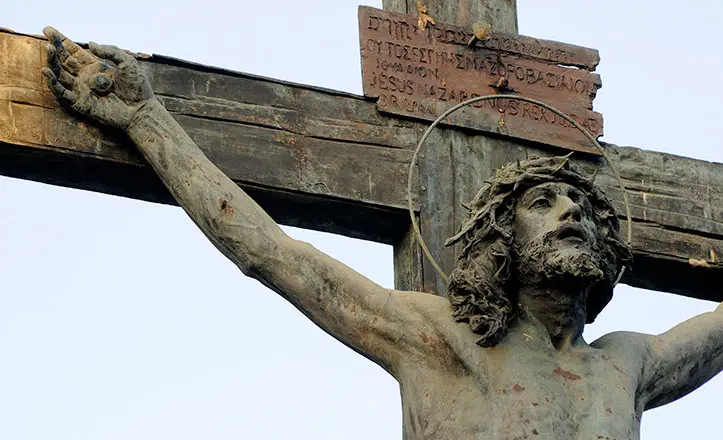
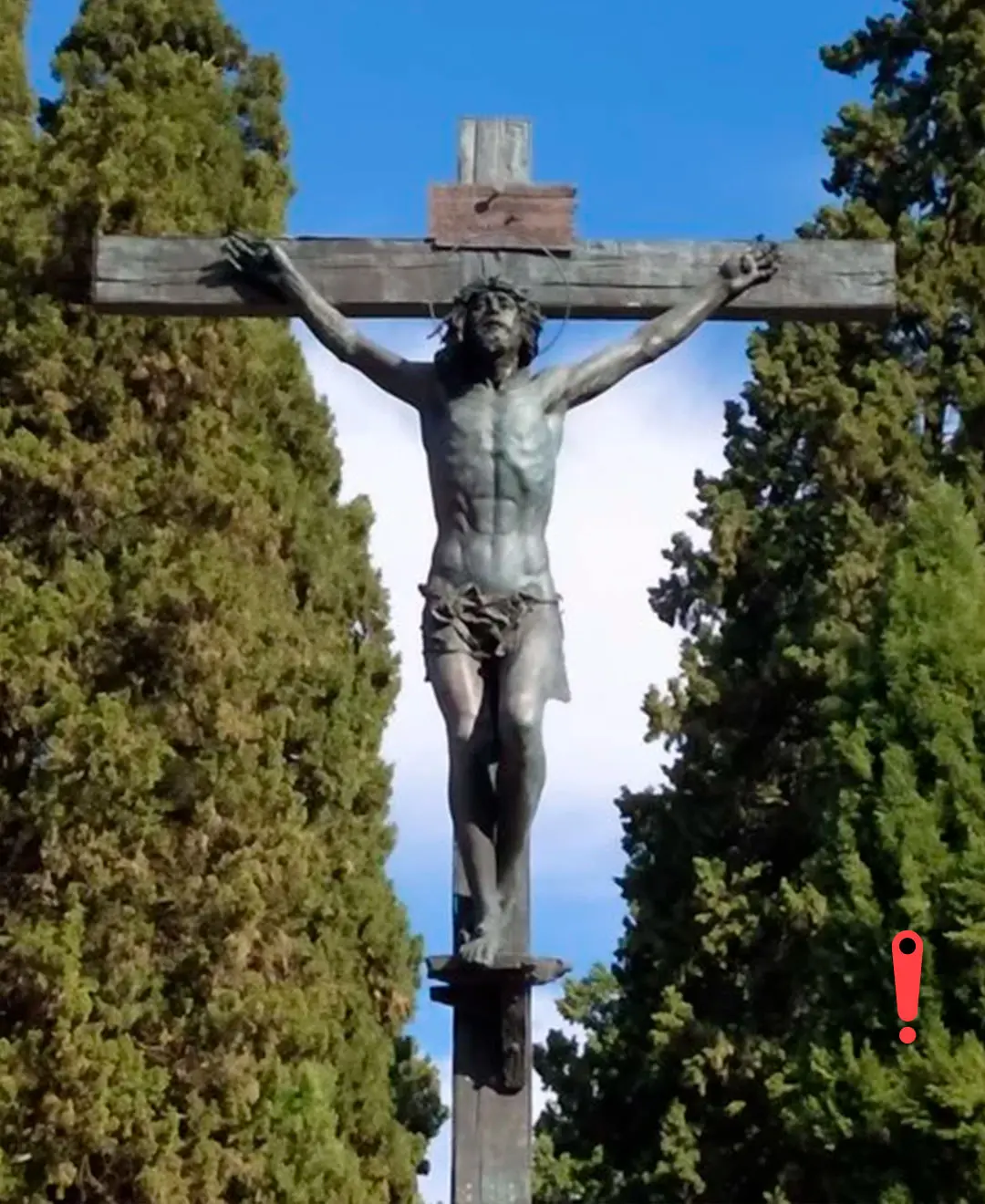
In the heart of the Cementerio de San Fernando, the Cristo de las Mieles stands with solemnity. The sculpture, made of bronze, depicts a serene Christ, with his mouth slightly open and his gaze raised to the sky, reflecting a resigned acceptance of his fate. The cross, although metallic, was worked with such precise detail that it looks like wood.
The sculpture's name comes from an unusual event: a swarm of bees nested in its mouth and dripped honey, something Sevillians first interpreted as a miracle, a sign that the Christ was weeping, and later, once the reality of the hive was confirmed, as a message of sweetness in death and hope in resurrection.
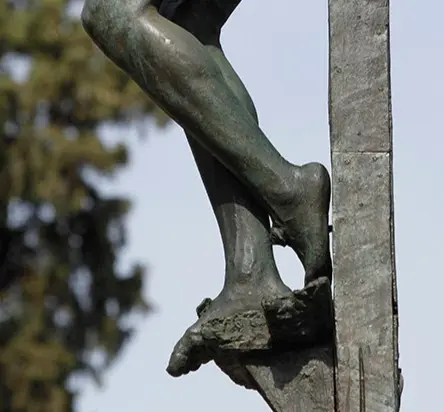
The Cristo de las Mieles stands out for its detailed anatomy and for the way Susillo chose to represent the feet, crossed in the reverse of what had until then been depicted in Christian imagery. It is said that, upon finishing the work and noticing this detail, Susillo was deeply distressed, as if he had committed an irreparable mistake.
But his torment went far beyond the sculpture.
Susillo's tragedy: art and destiny intertwined
Despite the success of his works, Antonio Susillo's life was marked by depression and anguish. The reasons are unclear:
- Some say it was due to financial problems, worsened after his marriage to María Luisa Huelin, which led him to ruin. And that all his hopes of being paid for the carving of the Christ vanished when he saw that he had made a mistake in crossing the feet
- Others argue that he felt misunderstood in the art world, frustrated at not receiving the recognition he deserved.
- There is also talk of the weight of his own work, as if each sculpture were a burden too heavy for his soul.
What is certain is that on 22 December 1896, in a desperate act, Susillo shot himself in the head near San Jerónimo, beside the railway tracks. His death shocked all of Seville.
At that time, suicide was considered a sin that prevented burial on consecrated ground. However, thanks to the influence of his circle, the cause of death on the death certificate was altered, attributing it to a cerebral haemorrhage. This allowed him to be buried in the Cementerio de San Fernando.
By an irony of fate, he now rests at the feet of the Cristo de las Mieles, his own work.
An enduring legacy in Seville
Today, more than a century later, Antonio Susillo lives on in his art. His sculptures adorn squares, churches and monuments, reminding us of the genius of a man who, despite his tragic end, left an indelible mark on Seville.
If you visit the Cementerio de San Fernando, be sure to approach the Cristo de las Mieles. Contemplating it is coming face to face with the soul of an artist, with his pain and his greatness. It is, without doubt, one of the most moving corners of the city.
Curiosities about Susillo and the Cristo de las Mieles
- Susillo was buried twice: in 1896 he was laid to rest in a common grave. In 1940, his remains were moved to the crypt directly beneath the Cristo de las Mieles.
- On the cross there is an inscription in three languages (Latin, Hebrew and Greek), as in the biblical tradition.
- The crossing of the feet is a unique detail in Christian imagery.
Susillo is an example of how art and tragedy can intertwine until they become part of a city's soul. And Seville, with its history full of light and shadow, does not forget its artists.