
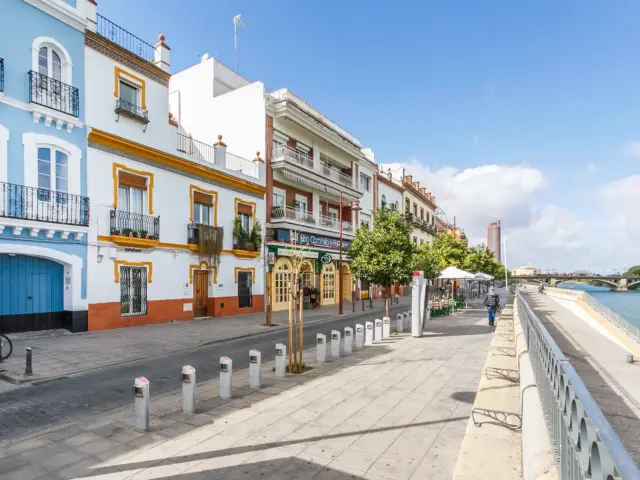
Seville is one of the most monumental cities in Europe. Its strategic position for more than three thousand years —Phoenician, Roman, Visigothic, Caliphal, Almohad city and capital of trade with the Americas— has left an artistic and architectural heritage of the highest order that makes it one of the most complete tourist destinations in Spain. In this complete guide to the monuments of Seville you will find detailed history, up-to-date opening hours, prices and the tips you need to make the most of your visit to the Andalusian capital.
Giralda and Seville Cathedral: the largest Gothic church in the world
UNESCO World Heritage · Old Town
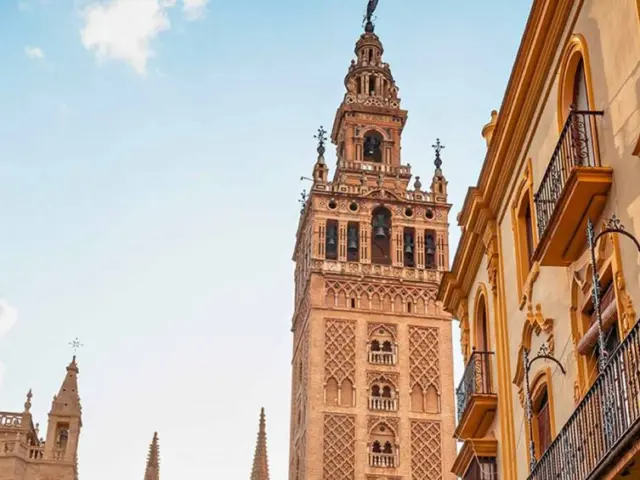
The Cathedral of Santa María de la Sede of Seville is the largest Gothic church in the world and the most visited monument in the city. Declared a UNESCO World Heritage Site in 1987 together with the Royal Alcázar and the General Archive of the Indies, it was built between 1402 and 1506 on the site of the former Almohad mosque. Inside it houses the tomb of Christopher Columbus, more than 80 chapels, the largest high altar in the world —with 44 gilded panels and nearly a thousand carved figures— and artistic treasures of incalculable value, such as paintings by Murillo, Zurbarán and Goya. The Giralda, its 104-metre bell tower, was built as an Almohad minaret between 1184 and 1196 and turned into a Christian tower after the Reconquista. Its 35 interior ramps —designed so that riders could climb on horseback— lead up to the terrace with the best panoramic views of Seville.
Royal Alcázar of Seville: the oldest royal palace in Europe
UNESCO World Heritage · Royal Palace
The Royal Alcázar of Seville is the oldest royal palace in continuous use in Western Europe, with documented origins in the 10th century. Declared a World Heritage Site in 1987, its architecture spans centuries of history: from the 12th-century Almohad palaces to the Renaissance reforms of Charles I, passing through the jewel of the complex, the Mudéjar Palace of Peter I (1364), with its lacework ceilings, Sevillian tiles and marble columns carved by Muslim craftsmen in the service of a Christian king. The Alcázar gardens, covering more than 15 hectares, are a maze of fountains, ponds with turtles, myrtle labyrinths and pavilions that will be familiar to fans of Game of Thrones, where they served as the setting for the kingdom of Dorne. The Spanish royal family still uses the private quarters of the palace during its official visits to Seville.
Plaza de España in Seville: the jewel of the Ibero-American Exhibition
Free admission · María Luisa Park
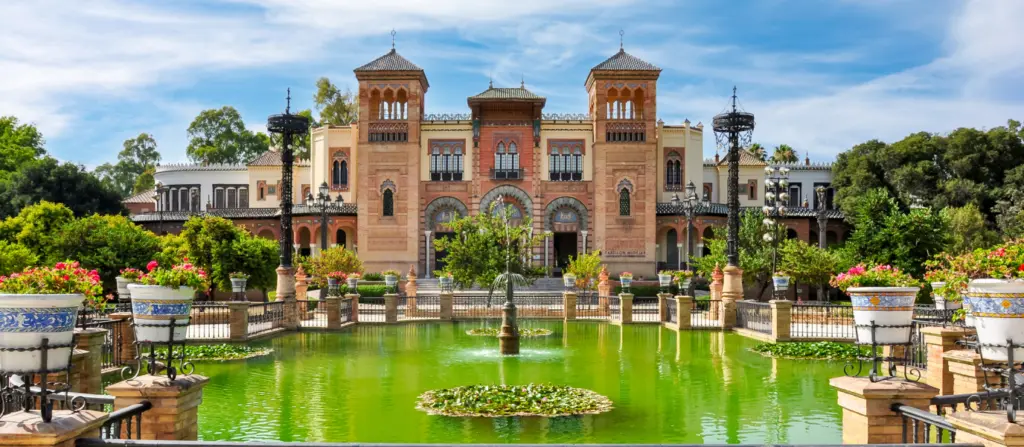
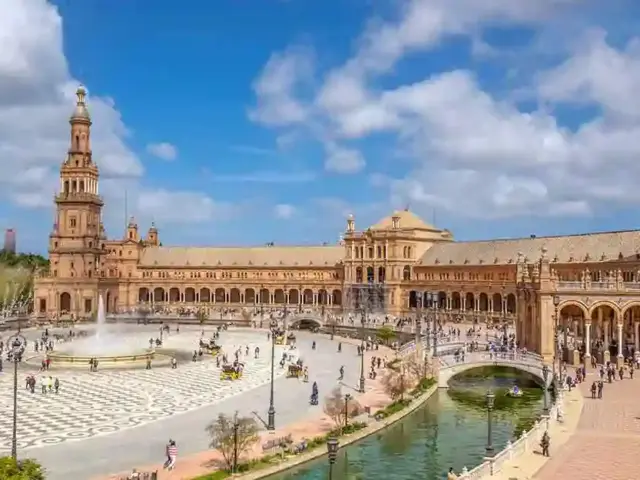
The Plaza de España in Seville is one of the most impressive architectural spaces in Spain and one of the most photographed in the world. Built for the Ibero-American Exhibition of 1929 to a design by the architect Aníbal González, its semicircle, 200 metres in diameter, includes four Venetian-style bridges, 48 hand-painted tile benches —one for each Spanish province, with historical scenes and ceramic maps made in Triana— a navigable canal and two twin towers of 74 metres. The building fuses Neo-Renaissance, Mudéjar and regionalist styles into a synthesis of Spanish architecture that has fascinated film directors from around the world: it has served as a location for Star Wars: Attack of the Clones, Lawrence of Arabia and dozens of international blockbusters. Visiting is free 24 hours a day and is especially magical at dawn, when there is no one around.
General Archive of the Indies: the memory of America in Seville
UNESCO World Heritage · Free admission
The General Archive of the Indies in Seville holds the largest documentary collection in the world on the history of Latin America and the Philippines: more than 80 million handwritten pages, including Christopher Columbus's original diaries, Hernán Cortés's letters to Charles I, the Capitulations of Santa Fe with which the Catholic Monarchs financed the first voyage, and the original plans of hundreds of American cities. Created in 1785 by Charles III to centralise all the documentation of the Spanish Empire in America, the building that houses it is the former Merchants' Exchange (Lonja de Mercaderes), designed by Juan de Herrera in 1572 in the same sober, geometric style as the Monastery of El Escorial. It has been a World Heritage Site since 1987 and admission is completely free.
📍 Address: Av. de la Constitución, 3, Seville
🌐 Website: cultura.gob.es · Archivo de Indias
Torre del Oro in Seville: the medieval watchtower on the Guadalquivir
13th century · Free on Mondays
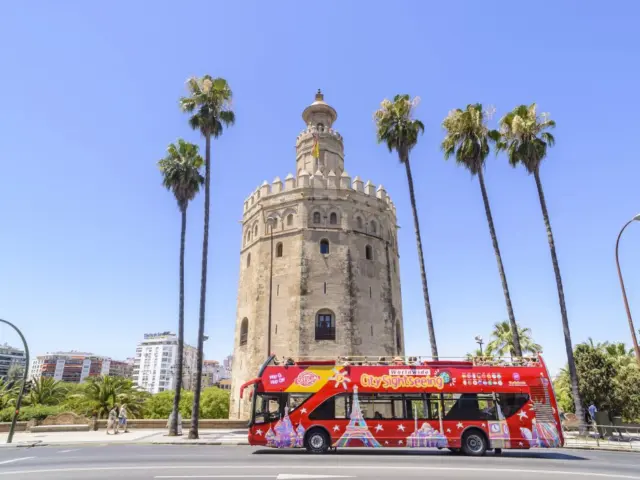
The Torre del Oro is the most recognisable symbol of Seville's Guadalquivir riverfront and one of the best-preserved medieval monuments in Andalusia. Built between 1220 and 1221 during the Almohad caliphate, this 36-metre-high twelve-sided tower was part of the city's defensive system: a thick iron chain stretched to the Triana bank blocked the river to enemy ships. According to tradition, its name comes from the golden tiles that originally covered its upper body and glittered over the water. Today it houses the Seville Maritime Museum, with navigation charts, ship models, nautical instruments and objects related to the Carrera de Indias. From its upper terrace there are magnificent views of the river, the Triana bridge and the Arenal district.
📍 Address: Paseo de Cristóbal Colón, s/n, Seville
🌐 Website: fundacionmuseonaval.com
Metropol Parasol in Seville: Las Setas, the largest timber structure in the world
Contemporary architecture · Plaza de la Encarnación
The Metropol Parasol, popularly known as Las Setas de Sevilla (The Mushrooms of Seville), is the largest laminated timber structure in the world, inaugurated in 2011 in the Plaza de la Encarnación. Designed by German architect Jürgen Mayer H. after an international competition, the project was highly controversial because of its cost (over 100 million euros) and its bold aesthetic in the heart of the historic city, but today it has become one of the essential icons of contemporary Seville. The structure is 150 metres long and its six wooden parasols rise up to 28 metres above the square. At its base it houses the Antiquarium, an archaeological museum with extraordinarily valuable Roman and medieval remains discovered during the foundation works, and the Encarnación Market. The upper walkway offers the best views of the Giralda and the rooftops of the old town. At night, with its programmed LED lighting, it becomes a visual spectacle unique in Europe.
Basílica de la Macarena: the heart of Seville's Holy Week
Religious · Semana Santa
The Basílica de la Macarena is the sanctuary of the Virgen de la Esperanza Macarena, the most venerated image in Seville and one of the most recognisable religious icons in all of Spain. This 17th-century carving, by an unknown sculptor, with its five crystal tears and its expression of serene suffering, leads every Good Friday the most moving procession of Seville's Holy Week: it leaves at dawn with a brotherhood of more than three thousand nazarenos and is broadcast live by television channels across Spain. The museum of the Hermandad de la Macarena safeguards the magnificent canopy embroidered in gold and silver, the historic jewels of the Virgin donated by the Duchess of Alba, the bullfighter Joselito and other illustrious Sevillians, as well as the rich artistic heritage accumulated over centuries. The neo-Rococo basilica was built between 1941 and 1949 and stands next to the only surviving stretch of the Almohad city walls.
Casa de Pilatos: the most luxurious Mudejar palace in Seville
Palace · Mudejar-Renaissance
The Casa de Pilatos is the largest private palace in Seville and one of the finest examples of 16th-century Andalusian civil architecture. Owned by the House of Medinaceli —one of Spain's most important noble families, which still lives in part of the building— its architecture masterfully blends Mudejar, late Gothic and Italian Renaissance styles in a unique combination that could only have emerged in 16th-century Seville. The great central courtyard with its marble fountain, the halls decorated with Triana tiles and Mudejar plasterwork, the Renaissance galleries and the Baroque chapels form a route of great beauty. The Casa de Pilatos also houses the largest private collection of classical Greek and Roman sculpture in Spain, with high-quality pieces brought from excavations in Italy. Unlike the Real Alcázar, this palace can be visited calmly and with hardly any queues, which makes it one of Seville's great secrets for the savvy traveller.
Plaza de Toros de la Real Maestranza: the most important bullring in Spain
Historic heritage · 18th century
The Real Maestranza de Caballería Bullring of Seville is the oldest, most important and most beautiful bullring in Spain. Built gradually between 1749 and 1881 by the Real Maestranza de Caballería—a noble institution founded in the 17th century—its oval layout, baroque façade in white and Seville ochre, the Royal Box with its canopy and its 12,000 seats make it a singular architectural monument of worldwide renown. The bullfighting season during the April Fair, with bullfights featuring the most important matadors on the circuit, is one of the most deeply rooted cultural and social events in Seville. The Maestranza Bullfighting Museum, accessible on a guided tour, preserves suits of lights and capes belonging to legendary figures such as Juan Belmonte, Joselito el Gallo and Manolete, paintings by Goya and Lucas Velázquez, and historical documents that turn the visit into a journey through four centuries of Spanish bullfighting history.
Palacio de las Dueñas: Antonio Machado's birthplace in Seville
Palace · Casa de Alba
The Palacio de las Dueñas, historic residence of the Dukes of Alba and property of the Casa de Alba Foundation, holds a special place in Seville's cultural history as the birthplace of the poet Antonio Machado on 26 July 1875. Built in the 15th century and extended in the 16th, its architecture combines late Gothic and Mudéjar styles in a synthesis characteristic of Seville in the age of the Catholic Monarchs. The central courtyard with Italian marble columns, the galleries covered in Triana tiles, the gardens with more than a hundred centuries-old trees—orange trees, palms, cypresses—and the Casa de Alba art collection, with paintings, sculptures, tapestries and objects gathered over centuries of noble history, make for an exceptional visit. Open to the public since 2016, the palace retains the intimate, family atmosphere that sets it apart from Seville's grand palace-museums.
El Salvador Church in Seville: the city's second cathedral
Religious · 18th-century Baroque
The Collegiate Church of the Divine Saviour is the second largest church in Seville and one of the great monuments of Andalusian Baroque. Built between 1674 and 1712 on the ruins of the city's former Islamic main mosque—whose ablutions courtyard survives today as the Patio de los Naranjos—the project was commissioned to the architect Leonardo de Figueroa, who designed a 35-metre-high central nave crowned by exceptionally rich Baroque vaults. The church of El Salvador houses two of Seville's most revered Holy Week images: the Cristo del Amor, a masterpiece carving by Martínez Montañés dated 1618, and the Jesús de la Pasión, which processes on Holy Tuesday with one of the oldest brotherhoods in the city. Plaza del Salvador is the favourite meeting spot of Sevillians at aperitif time, especially on spring evenings.
📍 Address: Pl. del Salvador, s/n, Seville
🌐 Website: catedraldesevilla.es · El Salvador
Macarena Walls: Seville's medieval heritage
Free admission · Almohad, 12th century
The Macarena Walls preserve the only intact stretch of the old Almohad enclosure that protected Seville during the Middle Ages: 180 metres of wall with 12 square towers of rubble stone rising above a Roman base from the 2nd century AD, making this site a palimpsest of more than two thousand years of urban history. The original Almohad wall, built between the 12th and 13th centuries, was over 6 kilometres long with 166 towers and 13 gates controlling access to the Islamic medina. Most of it was demolished in the 19th and 20th centuries to make way for urban expansion. The surviving stretch, next to the Basilica of the Macarena and the monumental Macarena Gate—a superb horseshoe arch from the Almohad period—forms one of the most authentic medieval ensembles in southern Spain.
📍 Address: C. Bécquer / Ronda de Capuchinos, Seville
🌐 Website: hermandaddelamacarena.es
María Luisa Park: Seville's largest historic garden
Nature · Free admission
The María Luisa Park is Seville's most important historic park and one of the most beautiful urban gardens in Spain. Its origins date back to 1893, when the Infanta María Luisa de Borbón donated to the city half of the gardens of the San Telmo Palace so that Sevillians could enjoy them freely. In 1929, the French landscape architect Jean-Claude Nicolas Forestier redesigned them for the Ibero-American Exhibition, creating a highly sophisticated layout with themed squares decorated with Triana tiles, ponds with ducks and swans, fountains, laurel-lined walkways and rows of palm trees. Its 34 hectares contain more than thirty squares with busts of Spanish-speaking artists and intellectuals, the famous Glorieta de Bécquer, and a colony of peacocks that roam freely among visitors.
📍 Address: Av. de María Luisa, s/n, Seville
🌐 Website: sevilla.org · Seville City Council
Santa Cruz Quarter: Andalusia's most photogenic Jewish quarter
Historic quarter · Jewish quarter
The Santa Cruz neighbourhood of Seville, the city's former Jewish quarter, is the most photogenic and recognisable corner of the Andalusian capital. Its urban layout — a labyrinth of narrow lanes lined with whitewashed houses, intimate squares with centuries-old orange trees, pots of geraniums and the ever-present scent of orange blossom — developed as a Jewish quarter from the Almohad period until the expulsion of the Jews in 1492. After the expulsion, the neighbourhood was repopulated by converts and Castilian families who kept the medieval urban structure intact, which is why its streets remain just as narrow, winding and charming as they were six hundred years ago. Among its essential spots are Calle Agua, the Plaza de Doña Elvira, the mysterious Callejón del Agua and the Hospital de los Venerables, which houses the Velázquez Centre with masterpieces by the Sevillian painter.
Triana Bridge (Isabel II): Spain's first iron bridge
Free admission · Opened 1852
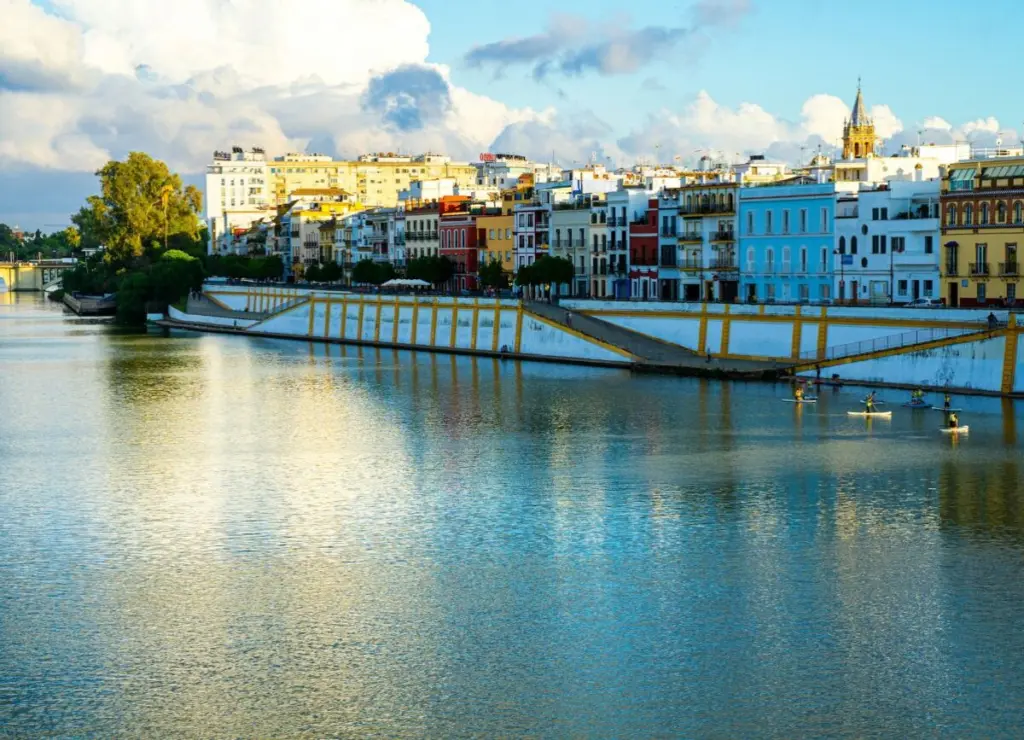
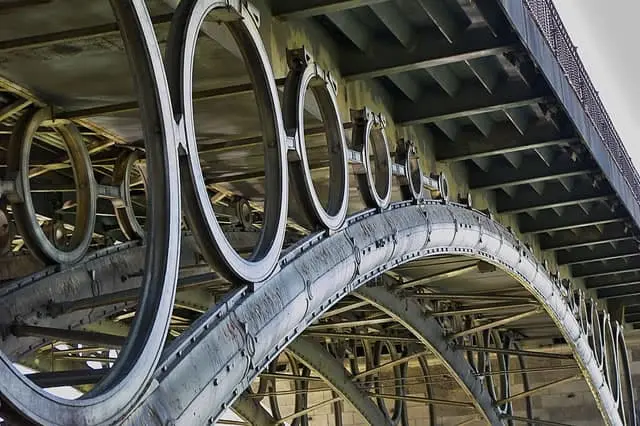
The Puente de Isabel II, universally known as the Triana Bridge, is Seville's oldest bridge and the first iron bridge built in Spain. Opened on 25 February 1852 during the reign of Isabel II, it was designed by the French engineers Gustave Steinacher and Ferdinand Beringer following the model of the Pont d'Iéna in Paris. Its four cast-iron pylons with neoclassical decoration rest on the cutwaters of the former Castle of San Jorge, the seat of the Seville Inquisition for more than three centuries, whose archaeological remains are preserved in the basement of the Triana Market. At sunset, with the Torre del Oro reflected in the river and the Seville sky turning orange, it offers one of the most romantic views of the city.
📍 Address: Between C. Betis (Triana) and Paseo de Cristóbal Colón (Arenal)
🌐 Website: sevilla.org · Seville City Council
Basílica del Gran Poder: Seville's most revered Christ
Religious · Free · Holy Week
The Basilica of San Lorenzo houses the most venerated image in Seville among the faithful: the Señor del Gran Poder, a life-size crucifix carved in cedar by Juan de Mesa and dated 1620. The figure, with its wooden crown of thorns, its expression of serene dignity under the weight of the cross and the extreme realism of its anatomy, is considered one of the absolute peaks of Spanish Baroque imagery. Declared an Image of Special Devotion and canonically crowned, the Christ of the Gran Poder leads one of the most solemn and moving processions of Seville's Holy Week on Good Friday: it leaves in the early hours with more than two thousand nazarenes from the centuries-old Hermandad del Gran Poder, founded in 1431.
Triana neighbourhood: birthplace of flamenco and Sevillian ceramics
Neighbourhood · Flamenco · Free
The Triana neighbourhood, located on the other side of the Guadalquivir, is the most characterful district in all of Seville. Its residents, the trianeros, have historically identified with a distinct identity from the rest of the city, proud of their neighbourhood as if it were an independent town. Triana is the historic birthplace of flamenco, with a tradition of singers and dancers dating back to the 18th century that has given the world figures such as Camarón de la Isla. It is also the origin of Sevillian artisan ceramics: the great tile workshops that decorated the Plaza de España and thousands of buildings across Spain were born on the banks of the Guadalquivir. The Triana Market, built over the ruins of the Castle of San Jorge, and Calle Betis, with its bars and night views over the river, are its two great draws.
Santa Ana de Triana Church: the cathedral of Seville's oldest neighbourhood
Religious · Gothic 13th century
The Church of Santa Ana de Triana, popularly known as the Cathedral of Triana, is Seville's oldest parish church in uninterrupted operation. Founded in 1276 by order of King Alfonso X the Wise in thanksgiving for the cure of an eye disease, it is one of the oldest Gothic buildings in Andalusia and a compendium of seven centuries of religious and artistic history. Its 13th-century Gothic walls coexist naturally with Mudéjar, Renaissance and Baroque additions that reflect the passing centuries. The church houses two of the most beloved images of the Triana neighbourhood: the Virgen de la Esperanza de Triana — passionate rival of the Macarena during Holy Week — and the Cristo de la Expiración (El Cachorro), a 1682 carving by Francisco Antonio Ruiz Gijón, world-famous for the striking expression of agony on the figure of Christ.
Parque del Alamillo: nature and avant-garde architecture from Expo 92
Nature · Free · Expo 92
Parque del Alamillo is Seville's largest natural space and one of the most valuable legacies of the 1992 World Expo. Created on the Isla de la Cartuja to house the Expo's sports facilities, its one hundred hectares of Mediterranean forest—stone pines, white poplars, eucalyptus, wild olives and mastic trees—are home to the Olympic Rowing and Canoeing Lake, as well as picnic areas, cycle lanes and perfectly maintained paths. The park's visual emblem is the Alamillo Bridge, designed by Santiago Calatrava: a cable-stayed bridge whose 142-metre inclined mast has become one of the icons of 20th-century architecture in Spain.
📍 Address: Isla de la Cartuja, s/n, Seville
🌐 Website: sevilla.org · Seville City Council
Monasterio de la Cartuja de Sevilla: from Christopher Columbus to contemporary art
Contemporary art · Isla Cartuja
The Monastery of Santa María de las Cuevas, on the Isla de la Cartuja, is one of the places with the most layers of history in all of Seville. Founded in 1400, it was one of the most influential monasteries of the Crown of Castile during the 15th and 16th centuries. Christopher Columbus lived in the monastery for long periods, preparing his expeditions to the New World, and his remains rested here for twenty-five years before being moved to the cathedral. In the 19th century it was acquired by the English businessman Charles Pickman, who installed his famous earthenware and porcelain factory: the large bottle-shaped kilns are preserved today as industrial heritage. For Expo '92 it was the Royal Pavilion of Spain, and since then it has housed the Andalusian Centre for Contemporary Art (CAAC), with works by Miquel Barceló, Antonio Saura and Carmen García Rodero.
Palacio de San Telmo: the richest Baroque portal in Spain
Palace · Churrigueresque Baroque
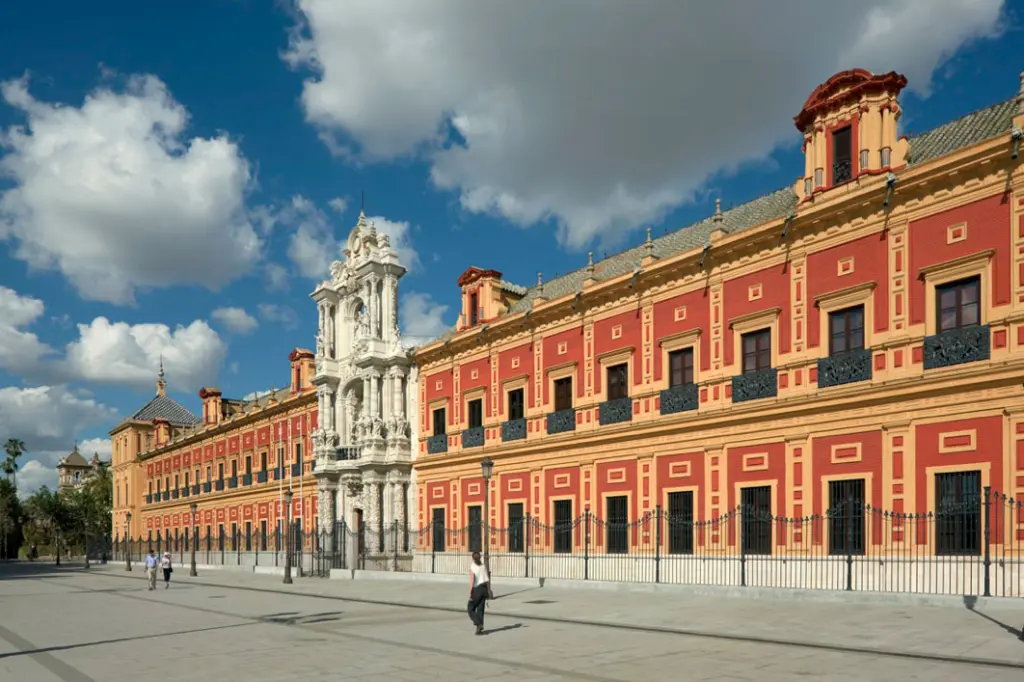
The Palacio de San Telmo, seat of the Presidency of the Regional Government of Andalusia, is one of the great monuments of Spanish secular Baroque. Built between 1682 and 1796 as a school for pilots for the Carrera de Indias, its main portal of 1734, designed by Matías de Figueroa, is considered one of the peaks of Spanish Baroque in Europe: 24 statues of illustrious Sevillian figures flank an entrance arch covered in reliefs, garlands, angels and Solomonic columns of a decorative richness and density rarely matched. The palace was also the residence of the Dukes of Montpensier during the 19th century, who redesigned its gardens in the Romantic style and hosted the first cultural salons in Seville there.
📍 Address: Av. de Roma, s/n, Seville
🌐 Website: juntadeandalucia.es · San Telmo Abierto
Royal Tobacco Factory of Seville: the original Carmen and the most beautiful campus in the world
18th century · University of Seville
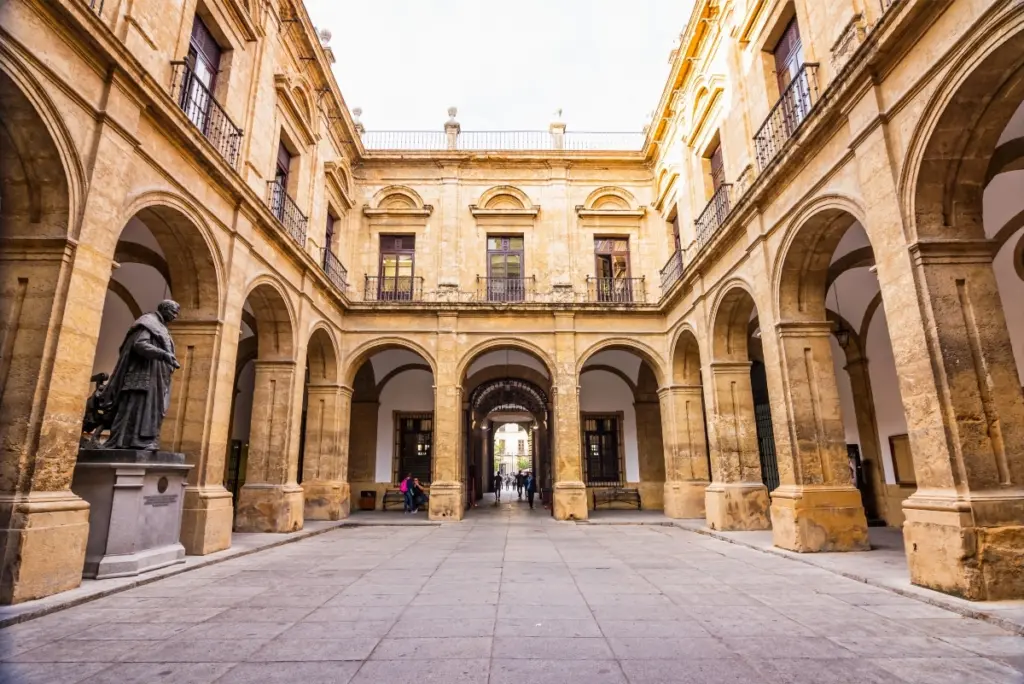
The Royal Tobacco Factory of Seville is, after El Escorial, the second largest civil building in Spain in terms of size. Built between 1725 and 1771, it was for nearly two centuries the largest and most productive tobacco factory in the Western world, employing up to 10,000 cigarette makers. This army of independent, hard-working women directly inspired the French writer Prosper Mérimée to create, in his 1845 novella, the character of Carmen, the most famous cigarette girl of Seville in the history of fiction, later immortalised by Bizet's opera. In 1954 the building was handed over to the University of Seville, becoming the home of its faculties of Law and Philology and one of the most beautiful university campuses in the world.
Hospital de la Caridad: Murillo, Valdés Leal and Seville's artistic secret
Baroque art · El Arenal
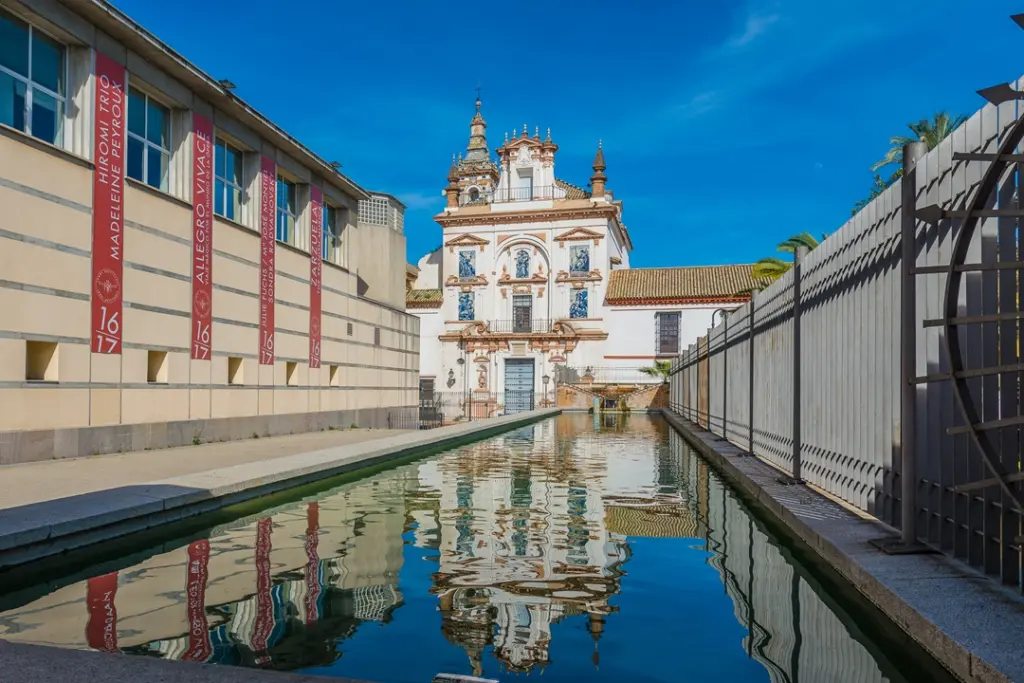
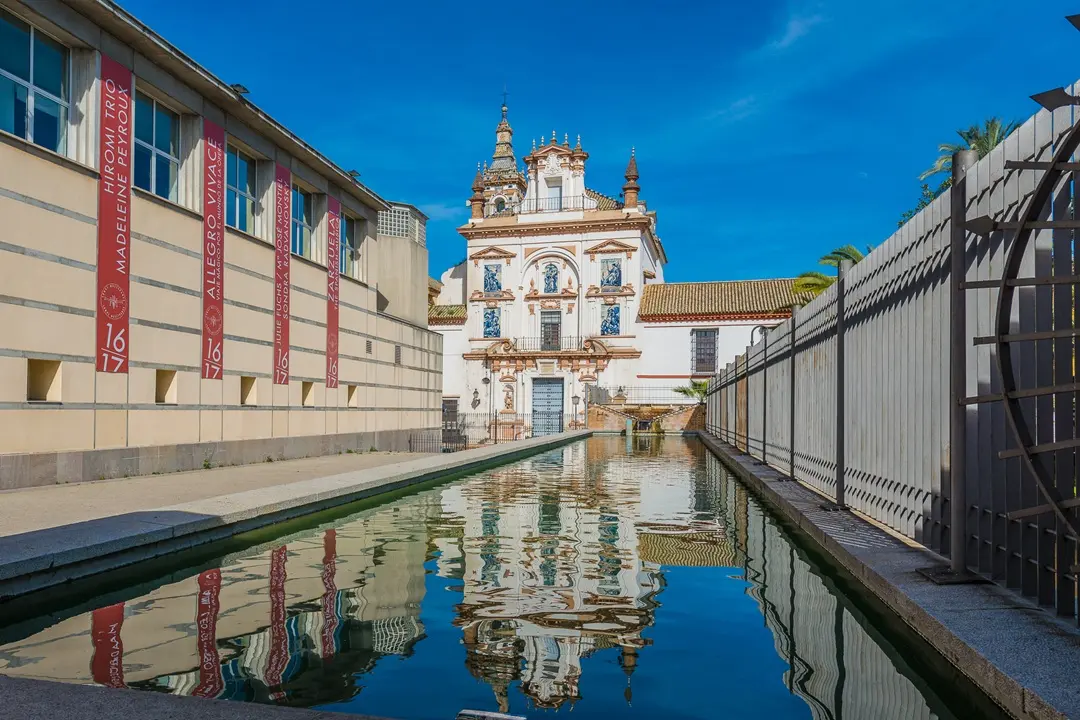
The Hospital de la Santa Caridad is, for many art experts, Seville's great artistic secret: a Baroque ensemble of the highest quality that most tourists overlook and that deeply impresses those who discover it. Founded in 1664 by Miguel de Mañara —the Sevillian aristocrat whose figure inspired the myth of the historical Don Juan— the hospital still fulfils its original mission of caring for those in greatest need today. Its church houses six large canvases by Bartolomé Esteban Murillo and the two most haunting paintings of Spanish Baroque: Finis Gloriae Mundi and In Ictu Oculi by Juan de Valdés Leal, allegorical representations of death and the vanity of worldly glory that move everyone who contemplates them.
Seville City Council: the jewel of Spanish Plateresque Renaissance
Plateresque Renaissance · Free visit
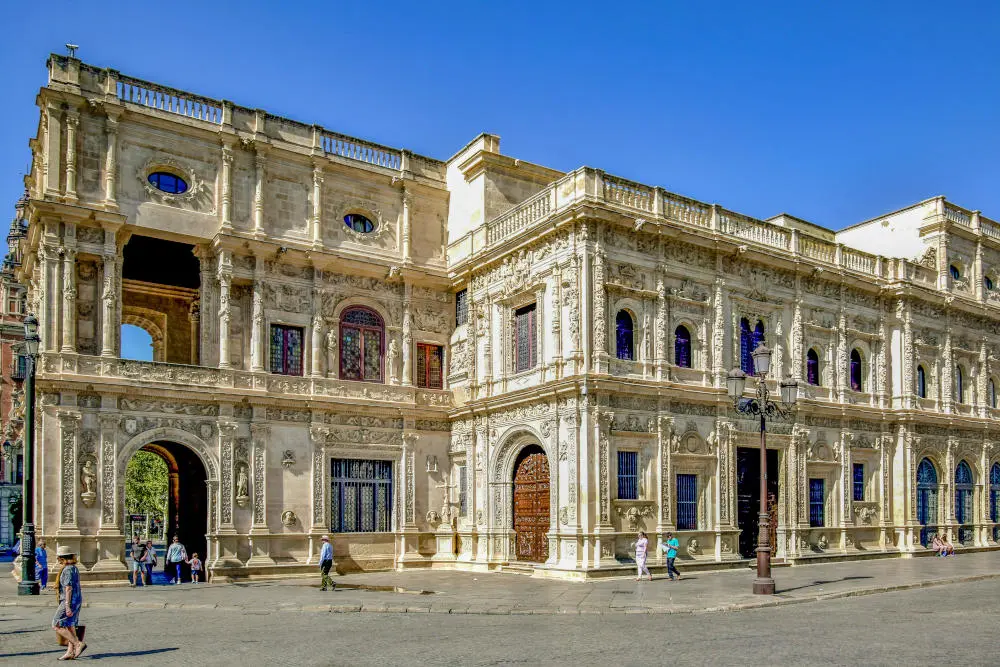
The Seville City Hall (Casa Consistorial), on Plaza de San Francisco, is universally recognised by art historians as the finest and most complete example of Plateresque Renaissance architecture in Spain. Begun in 1527 by the architect Diego de Riaño from Toledo, its façade is covered in sculpted decoration of extraordinary richness and meticulousness: medallions featuring figures from classical antiquity, grotesques in the style of the Roman Renaissance, cherubs and columns covered in plant-like reliefs that Riaño and his successors carved with the delicacy of a goldsmith. The interior of the town hall preserves the Mayors' Hall (Salón de los Alcaldes), with gilded coffered ceilings and a collection of portraits of Seville's rulers spanning more than five centuries of municipal history.
📍 Address: Pl. de San Francisco, 1, Seville
🌐 Website: sevilla.org · Seville City Council